
Industry-Specific Digital Marketing
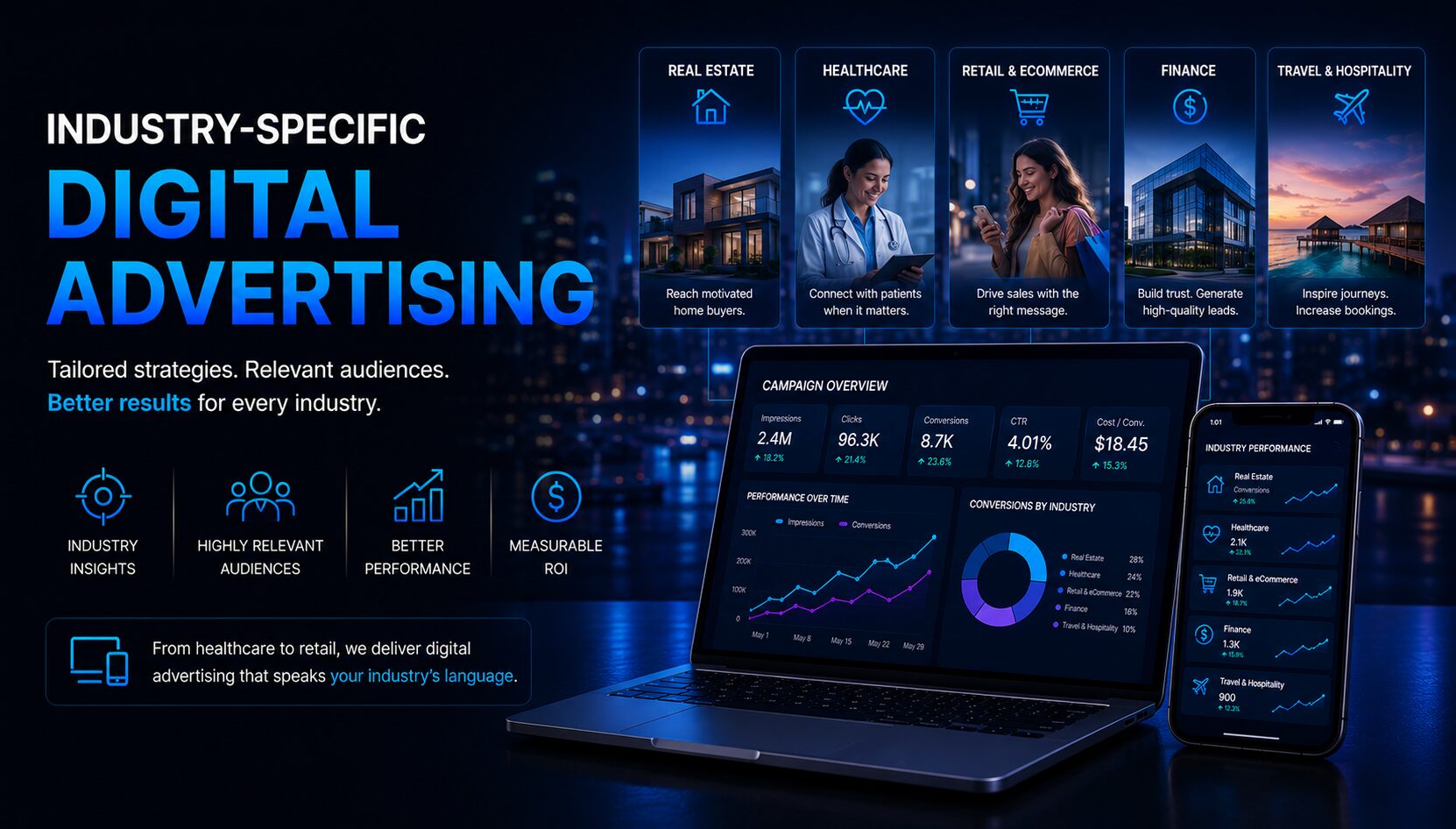
Industry-Specific Digital Marketing: Why One Size Fails
A generic marketing plan treats a law firm, a roofing company, and a hospital the same way. That is a mistake. Each industry has its own customers, buying journeys, rules, and competition. Industry-specific digital marketing accounts for those differences, and that is why it consistently outperforms one-size-fits-all approaches. This guide explains why tailoring matters and how it works across sectors.
We work with businesses across the US in many industries. Here is why specialization wins.
Why Generic Marketing Falls Short
Every industry sells differently. The way a customer chooses a surgeon is nothing like the way they pick a vacation. The timeline, the emotions, the research, and the trust signals all differ.
A generic plan ignores those differences and applies the same channels and messages to everyone. The result is wasted budget and weak results. Industry-specific digital marketing starts from the customer journey in your sector, then builds the plan around it. That is the difference between marketing that works and marketing that just spends.
Healthcare Marketing
Healthcare marketing runs on trust and accuracy. Patients want reassurance and credibility, and the space carries regulations that shape what you can say.
The channel mix reflects that. Healthcare marketing leans on strong local SEO so patients find nearby care, plus reputation and trust signals. AI search visibility matters here too, since patients increasingly ask AI for health guidance and provider recommendations.
Legal Marketing
Legal marketing is fiercely competitive and high value. A single case can be worth a great deal, so firms compete hard for visibility on key searches.
That makes legal marketing heavy on high-intent channels. Paid search and PPC capture people actively seeking an attorney, while SEO services build long-term authority. The messaging must convey expertise and trust, because clients are making a serious decision.
Home Services Marketing
Home services often involve urgent needs. A burst pipe or a broken AC means the customer is searching right now and ready to hire fast.
So home services marketing prioritizes immediate visibility. Local SEO and paid search capture urgent searches, while geofencing mobile ads target specific neighborhoods. Reviews and a fast, easy website turn that urgent traffic into booked jobs.
Professional Services Marketing
Professional services sell expertise, often over a longer decision cycle. Clients research, compare, and build confidence before they commit.
Professional services marketing focuses on demonstrating credibility over time. Content and social media management build authority, while email marketing nurtures prospects through that longer journey. The goal is to be the trusted expert when the client is finally ready.
Education Marketing
Education involves big, considered decisions and multiple decision-makers. Students, parents, and families all weigh in, and the timeline is long.
Education marketing needs a strong middle funnel to nurture those decisions. Video and paid social ads tell the story and build connection, while email keeps families engaged through a long consideration period.
Travel and Tourism Marketing
Travel and tourism sell experiences and emotion. People imagine themselves in a place before they book, so visual storytelling drives decisions.
Travel and tourism marketing leans on rich visual channels. YouTube advertising and connected TV showcase destinations, while retargeting keeps the dream alive until the traveler books.
Entertainment Marketing
Entertainment lives on attention, frequency, and buzz. Audiences expect a constant stream of fresh, engaging content.
Entertainment marketing thrives on high-volume social and video. Frequent organic content, paid social ads, and video formats keep audiences engaged and coming back. Speed and creativity matter more here than in almost any other sector.
The Common Thread
Notice the pattern. Every industry uses digital channels, but the mix, the messaging, and the emphasis change completely. The channels are tools. Industry knowledge is what tells you which tools to use and how.
That is why a full-service partner with industry experience is so valuable. They skip the generic playbook and build a plan shaped by how your customers actually buy.
The Bottom Line
Industry-specific digital marketing wins because it respects what makes your business different. Your customers, your buying journey, and your competition are not like anyone else’s, so your marketing should not be either. The right channels, tuned to your industry and tied together with skill, beat a generic plan every time.
Want marketing built for your industry? Take our quick marketing quiz and we will tailor a plan to your sector.
FAQs
Why does industry-specific digital marketing work better?
Each industry has its own customers, buying journey, rules, and competition. Tailoring the channel mix and messaging to those realities produces far better results than a generic plan applied to everyone.
Do all industries use the same channels?
They use the same set of channels but in very different mixes. A home services business may prioritize urgent local search, while travel and tourism leans on visual video storytelling. The emphasis changes by sector.
How does healthcare marketing differ from legal marketing?
Healthcare runs on trust, accuracy, and local discovery within regulatory limits. Legal is highly competitive and high value, leaning hard on high-intent search to reach people actively seeking an attorney.
Why is industry experience important in an agency?
Industry experience tells an agency which channels to use and how to message them. It skips the generic playbook and builds a plan around how your specific customers actually buy.
Can one agency handle many industries?
Yes, when it builds dedicated knowledge for each. A full-service partner with industry experience tailors strategy by sector rather than applying one approach to every client.