
What Is Connected TV Advertising
What Is Connected TV Advertising? A Plain English Guide
The television in the living room has changed. It is no longer just a screen connected to a cable box. It is an internet device that streams shows, plays games, and runs apps. That shift created an entirely new ad channel, and most small business owners are still figuring it out. The question many of them ask first is simple. What is connected TV advertising, and is it worth a try?
The short answer is yes, especially for local businesses. If you serve customers in Cherry Hill, Marlton, Camden, or Haddonfield, this channel reaches them where they actually watch. To see how we manage it, start with our connected TV advertising services.
What Is Connected TV Advertising?
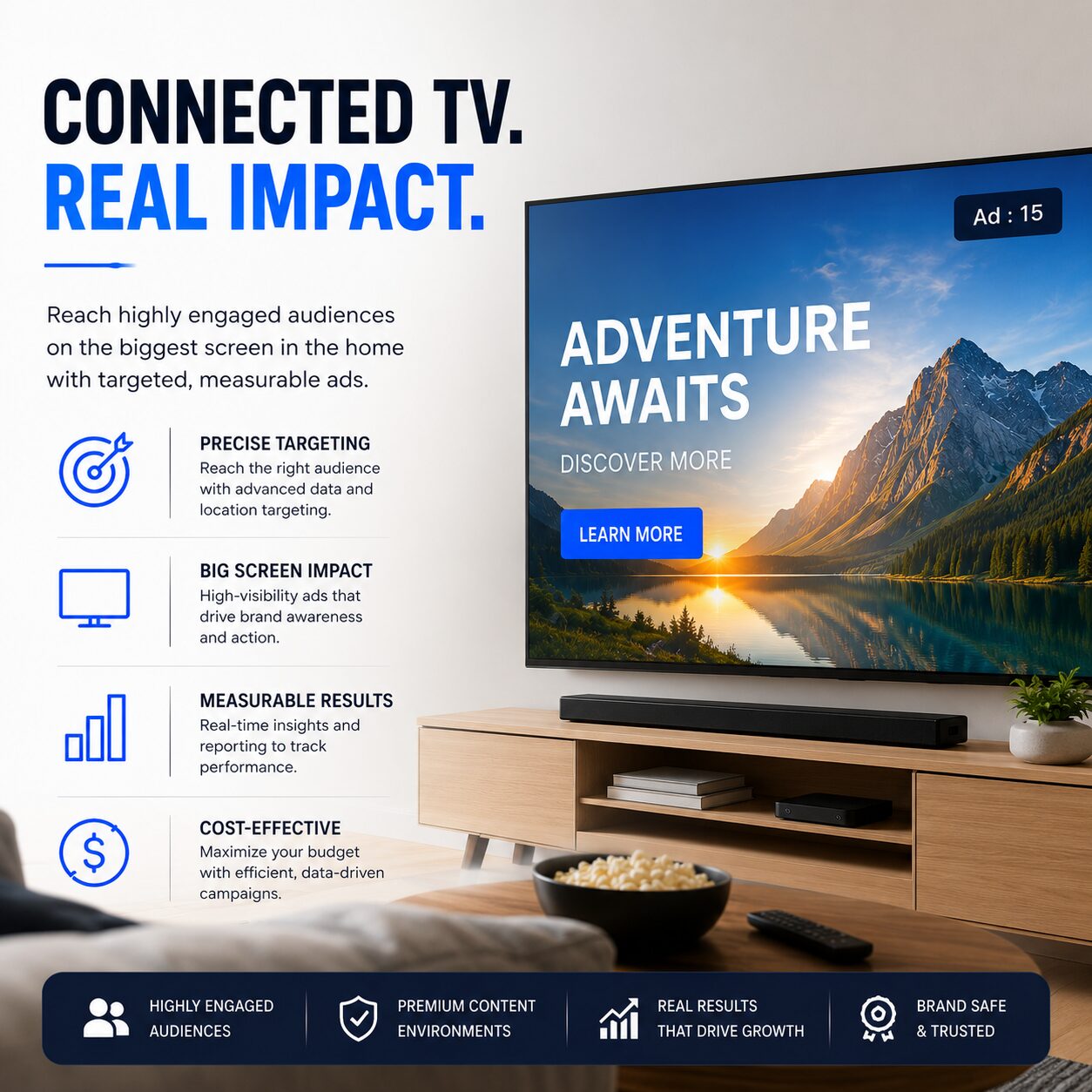
Connected TV advertising, often shortened to CTV, is the practice of running video ads on televisions that connect to the internet. Smart TVs, Roku, Apple TV, Amazon Fire TV, and gaming consoles all count. Whenever a viewer watches a streaming app on a real television set, that household becomes reachable through CTV.
Think of it as TV advertising with digital precision. The ad still plays on the big screen. The buying, targeting, and measurement all happen like a digital campaign. You pick the audience by location, demographics, interests, and behavior. The platform delivers the ad to those households. Reports show exactly who saw what and when.
That mix is why CTV has grown so fast. It captures the impact of television while removing the waste of broad cable buys. A Marlton dentist no longer pays to reach viewers in Pennsylvania. A Camden contractor no longer pays for impressions in Cape May. The ads land where the buyers actually live.
CTV vs OTT vs Streaming TV
Owners who ask what is connected TV advertising usually ask about these terms next. The category comes with a stack of acronyms. CTV stands for connected TV, which refers to the device. OTT stands for over the top, which refers to delivery without traditional cable. Streaming TV is the everyday term most viewers use.
In practice, the categories overlap. A Hulu ad watched on a Roku is CTV, OTT, and streaming all at once. For most local business owners, the differences are technical, not practical. What matters is reach, targeting, and results, and CTV delivers on all three. For a deeper look at one major platform group, see our Hulu, Disney+, and ESPN streaming ads page or read our streaming TV advertising guide for an applied walkthrough.
Why Local Businesses Benefit
Three things make CTV a strong fit for small and mid sized businesses. First is the audience. More than eighty percent of US households now stream regularly. If your customers are in Cherry Hill, Marlton, Camden, or Haddonfield, most of them are watching CTV every week.
Second is the budget. Traditional cable buys often required tens of thousands of dollars to reach a regional audience. CTV campaigns can launch for a few thousand dollars per month, sometimes less. The savings come from cutting the waste, not the impact.
Third is the data. Cable could not tell you who watched. CTV can. The platforms report which devices played your ad, how often, and what happened next. Some campaigns also track store visits and online activity that follows the impression, which closes the loop in ways cable never could.
Where CTV Ads Show Up
CTV inventory lives across a wide set of apps. Hulu, Peacock, Paramount+, Disney+, Max, and Tubi all support ad campaigns. Sports services like ESPN and free ad supported platforms like Pluto add more reach. Smart TV manufacturers also offer ads on their home screens.
Each platform has its own audience and content. Hulu reaches a wide entertainment audience. ESPN draws sports fans. Tubi pulls a value conscious viewer. A strong campaign mixes a few platforms so the same ad meets viewers in different mindsets across the week. Pair CTV with YouTube advertising and you cover the second screen too, since many viewers watch YouTube on a phone while a streaming show plays on the TV. For a small business breakdown of that channel, see YouTube advertising for small business.
How a CTV Campaign Works
The process is straightforward. Define a clear goal, such as awareness, store visits, or leads. Build a target audience using location, demographics, and interests. Create a fifteen or thirty second video ad. Launch the campaign through a CTV platform or partner. Measure and refine.
The creative does not need a Super Bowl budget. A clean, focused thirty second spot filmed locally often outperforms a polished generic one. The audience trusts what feels real. Show your team, your work, and your neighborhood across Cherry Hill, Marlton, Camden, or Haddonfield.
Pair CTV with location based tactics for stronger results. Adding geofencing mobile ads lets you reach the same households on their phones a few hours after they see your TV spot. The combination drives action faster than either channel alone.
Measuring Connected TV Advertising
Owners who ask what is connected TV advertising are often surprised by how deep the reporting runs. Reports cover the basics and more. Standard metrics include impressions, completion rates, frequency, and unique households reached. Advanced reports tie ad exposures to store visits, online activity, and conversions on your website.
Plan a monthly review. Trim weak placements, scale strong ones, and refresh creative every six to eight weeks. The discipline is what separates good campaigns from forgettable ones. To see how that consistency adds up, browse our client results.
For the wider picture across channels, our full marketing services coordinate CTV with search, social, and direct response so each channel feeds the next.
Who Should Use Connected TV Advertising
CTV fits businesses that want broad local awareness with measurable results. Home services, medical practices, law firms, restaurants, retail, and event venues all qualify. If your buyer watches TV at home and decides on your service over time, CTV belongs in the plan.
CTV may be less critical for businesses that close every sale on the first click. Those buyers tend to be best reached through search or social. Still, even those companies often benefit from CTV’s branding effect, especially when the goal is to outpace local competitors over a year.
Frequently Asked Questions
What is connected TV advertising in simple terms?
Connected TV advertising is video advertising shown on internet connected televisions, including smart TVs, Roku, Apple TV, Amazon Fire TV, and gaming consoles. The ads play on a real TV screen but are bought and measured like digital campaigns. That gives local businesses TV impact with digital precision.
What is the difference between CTV and OTT?
CTV refers to the device, meaning a TV connected to the internet. OTT refers to the delivery method, meaning streaming content delivered over the top of traditional cable. In daily use, the two overlap heavily, and most local business owners can treat them as the same channel.
How much does CTV advertising cost?
Most local campaigns launch with a few thousand dollars per month or less. The exact spend depends on goals and audience size. Tight targeting around Cherry Hill, Marlton, Camden, and Haddonfield keeps costs efficient.
Can I measure results from connected TV ads?
Yes. Reports include impressions, completion rates, unique households, and frequency. Advanced reports tie ad exposures to store visits, online activity, and conversions. The level of measurement was simply not possible with traditional cable.
Who should use connected TV advertising?
Any local business that wants broad household awareness with measurable results. Home services, medical, legal, retail, and hospitality are common fits across Cherry Hill, Marlton, Camden, and Haddonfield. Industries we serve full breadth is reviewed often, so check our industries we serve page for specifics.
Ready to Take Over the Living Room?
Your customers in Cherry Hill, Marlton, Camden, and Haddonfield are watching CTV tonight. Make sure your ad is in the lineup. Book a free CTV consultation and we will design a connected TV plan built for your South Jersey market.