
Digital Out of Home Advertising: A Quick Guide for Local Businesses
Digital Out of Home Advertising: A Quick Guide for Local Businesses
Billboards are not what they used to be. The static vinyl signs along Route 70 still work, yet the screens beside them now do something far more powerful. Digital out of home advertising lets you change your message in seconds, target by time of day, and reach buyers in the exact moment they are out and ready to spend.
That flexibility is reshaping local marketing across South Jersey. A boutique in Haddonfield, a restaurant in Cherry Hill, a contractor in Camden, and a clinic in Marlton can all benefit from the same flexible reach. To see how the channel fits a wider plan, start with our digital out of home advertising services.
What Is Digital Out of Home Advertising?
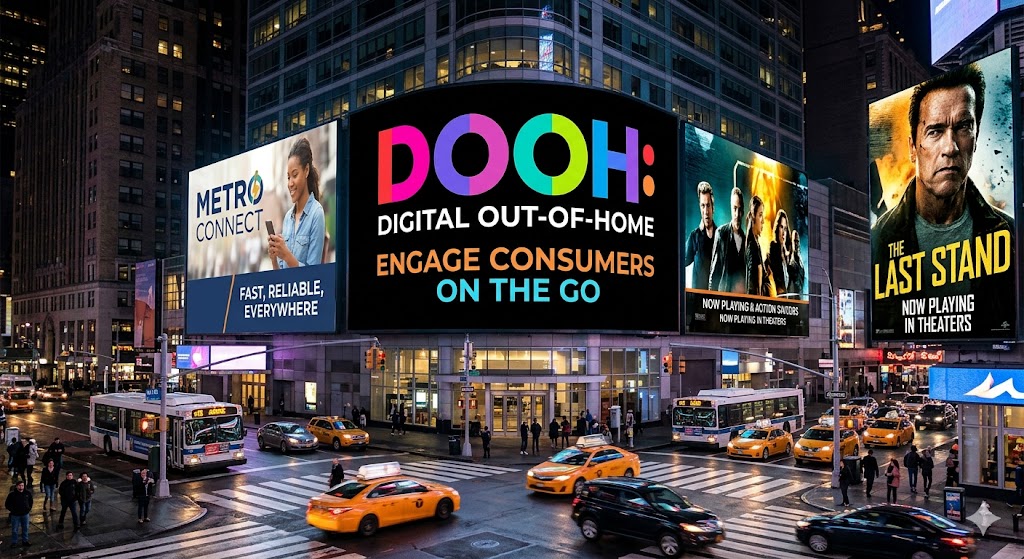
Digital out of home advertising, often called DOOH, is the modern version of billboard and signage advertising. Instead of printed posters, your ads appear on digital screens. These screens sit in places people pass every day, such as highways, gas stations, gyms, malls, and waiting rooms.
Three things make DOOH different from old school billboards. First, your creative can change instantly. Second, you can run several different ads in the same week without printing anything. Third, you can buy ads programmatically, which means software places them based on time, weather, traffic, or audience data.
The result is a billboard that thinks. It can show a breakfast offer in the morning and a happy hour offer in the afternoon. That kind of timing was impossible with paper.
Why Digital Out of Home Advertising Works for South Jersey Businesses
People in South Jersey spend a lot of time outside the home. They commute, they shop, they sit in waiting rooms. Every screen they pass is a chance to put your brand in front of them.
That presence builds trust over time. A Marlton family that sees your name three times a week on a screen near the Promenade gets familiar with you. Familiarity drives the call when they need the service. The repetition is what makes digital out of home advertising one of the strongest awareness channels available.
It also pairs well with mobile. Many shoppers see a DOOH ad in Cherry Hill, then search for the business on their phone minutes later. Add precise location targeting through geofencing mobile ads and the combination becomes a closed loop. The screen creates the spark, the phone closes the deal.
Where Digital Out of Home Ads Appear
The reach goes well beyond highways. Modern DOOH inventory shows up in a wide range of locations. You can run on roadside digital billboards in Camden and along the AC Expressway. You can run on small screens inside convenience stores in Haddonfield. You can target waiting room screens at medical offices, or gym screens during peak workout hours.
Each location reaches a different mindset. Highway screens build mass awareness. Gas station screens reach commuters with time on their hands. Waiting room screens reach a captive audience. The right mix depends on your goal.
Strong campaigns blend a few formats. A Cherry Hill home services brand might combine highway boards with screens in local hardware stores. A Marlton dental practice might focus on waiting rooms and gym screens. To explore other formats that mix well, see our broader digital marketing services.
How to Plan a Digital Out of Home Campaign
A clear plan keeps your budget focused. Start with a single goal. Do you want to drive store visits, build brand awareness, or support an event launch? The goal shapes every other choice.
Next, pick your zones. List the South Jersey areas where your buyers live, work, and travel. For most local businesses that means Cherry Hill, Marlton, Camden, and Haddonfield, plus the routes that connect them. Concentrated zones outperform scattered ones.
Then keep your creative simple. People glance at digital out of home advertising for two or three seconds. Use a bold image, a short headline, and one clear call to action. Skip the fine print. Save the details for your website or your landing page.
Pair the campaign with a follow-up channel like connected TV advertising or streaming TV ads so the audience sees you again later, this time on the couch. That layered approach is how the biggest local brands stay top of mind.
Measuring Results from Digital Out of Home Advertising
Old billboards were hard to measure. Digital out of home advertising solves that problem. You can track impressions by screen, by time, and by location. You can also tie campaigns to mobile activity using location data, which shows whether the people who saw your ad later visited your business.
Tracking should match the goal you set up front. For store visit campaigns, measure foot traffic lift. For awareness, measure reach and frequency. For lead generation, measure search lift and form fills during the campaign window.
Plan to review results monthly. Adjust your zones, dayparts, and creative based on the numbers. Strong campaigns get sharper over time. You can review client results to see how this discipline plays out across different industries.
Common Mistakes to Avoid
A few traps quietly kill DOOH campaigns. Long copy is the most common. If your ad needs three sentences to make its point, it will not land in the seconds you have. Cut it down.
Scattering screens too wide is another mistake. Ten screens across one tight area beat fifty screens spread across the state. Focus wins. Concentrate on the South Jersey zones where your buyers actually live.
Skipping creative refresh is the third. Run the same image for six months and people stop seeing it. Plan to swap your creative every four to six weeks. Need help choosing where to run? Our team supports the industries we serve with format and location guidance built around real audience data.
Frequently Asked Questions
What is digital out of home advertising?
Digital out of home advertising is the use of digital screens, billboards, and signage to deliver ads in public spaces. The screens can change creative instantly and can be bought programmatically. That makes them more flexible and trackable than traditional printed billboards.
How much does digital out of home advertising cost?
Costs vary by format and location. A roadside billboard in Cherry Hill differs in price from a small screen in a Haddonfield coffee shop. Most local campaigns can run with a modest monthly budget, especially when targeted tightly to a few high traffic zones.
Can I measure results from a DOOH campaign?
Yes. Modern platforms report impressions by screen and can tie exposures to mobile signals to measure store visits and online lift. That is a major upgrade over traditional billboards, where measurement was rough at best. Pairing DOOH with how geofencing works deepens the tracking even more.
What formats are available?
Common formats include roadside digital billboards, gas station screens, gym screens, waiting room screens, and retail signage. Each format reaches a different mindset. The best campaigns mix a few formats to cover commuting, shopping, and downtime moments.
How is DOOH different from traditional billboards?
Traditional billboards use printed vinyl and stay static for weeks. Digital out of home advertising uses screens that can change creative in seconds, run multiple ads, and respond to time, weather, or audience data. The flexibility makes the medium far more efficient.
Ready to Put Your Brand on Screen?
Your buyers in Cherry Hill, Marlton, Camden, and Haddonfield pass dozens of screens every day. Make sure one of them is yours. Request a free DOOH consultation and we will map a digital out of home advertising plan built for your South Jersey market.