
Geofencing and Programmatic Display
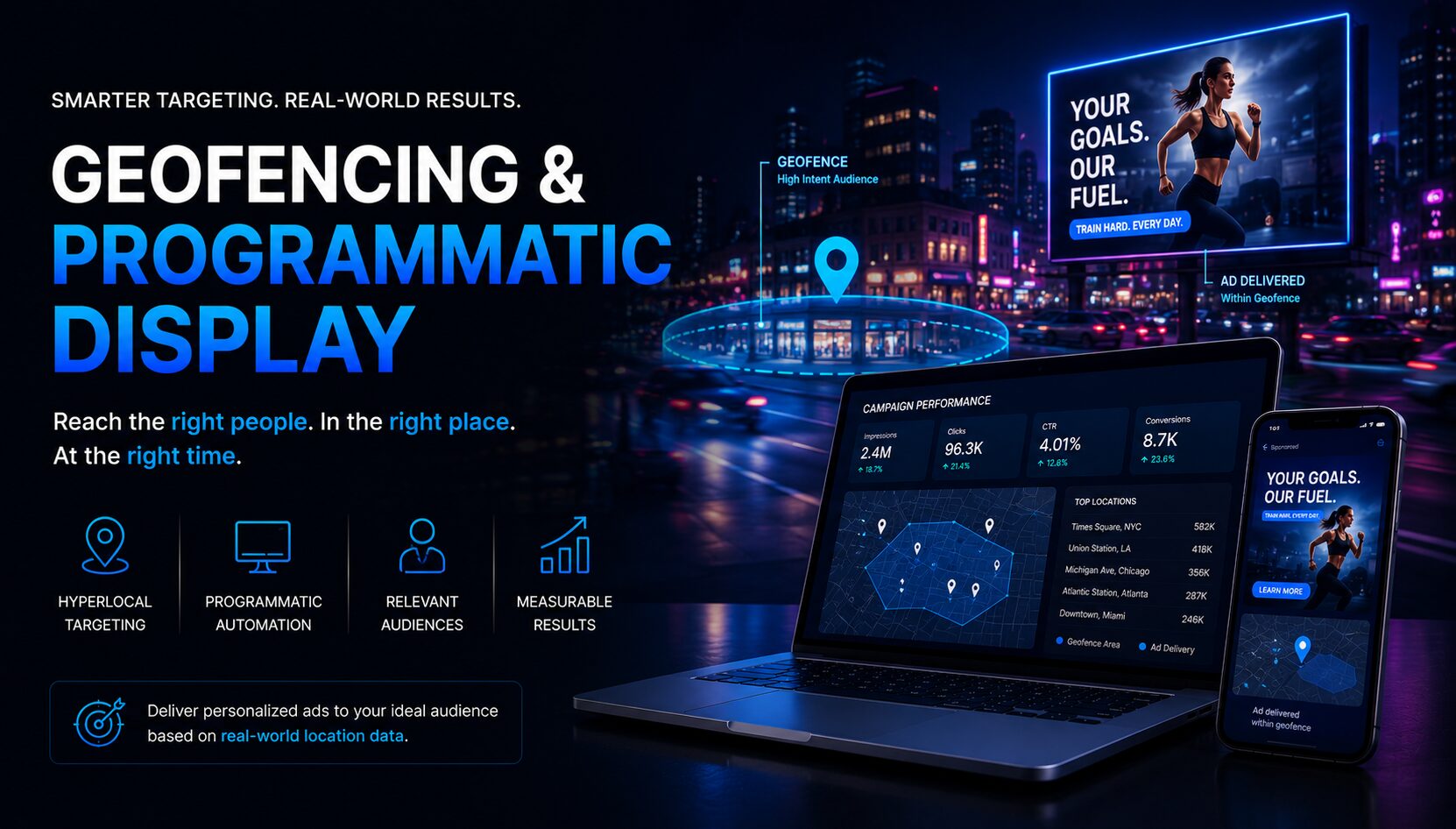
Geofencing and Programmatic Display: Reaching the Right Audience
Spraying ads at everyone is expensive and wasteful. The smarter approach is precision. Show your message to the right people, in the right place, at the right time. Geofencing and programmatic display are two of the most precise tools in digital advertising. This guide explains how each one works and how they combine to reach exactly who you want.
We run these campaigns for businesses across the US. Here is how they work.
What Programmatic Display Is
Programmatic display is the automated buying of banner and visual ads across the web. Instead of negotiating placements one by one, software buys ad space in real time, targeting the audiences you choose.
The power is in the targeting and the scale. Programmatic display can reach your prospects across thousands of sites and apps, based on their interests, behavior, and demographics. It keeps your brand visible as people move around the web.
What Geofencing Is
Geofencing adds a location layer to targeting. You draw a virtual boundary around a physical place, and ads serve to mobile devices that enter it.
Geofencing mobile ads let you target with remarkable precision. A neighborhood, a trade show, a stadium, or even a competitor’s parking lot can become your audience. This is targeting tied to real-world behavior, not just online activity.
Why Precision Matters
Broad advertising wastes budget on people who will never buy. Precision targeting flips that. Every impression goes to someone who fits your audience, so your spend works harder.
This also improves your results downstream. When the right people see your ads, more of them click, visit, and convert. Precision is not just about saving money. It is about better outcomes from the same budget.
How Geofencing Drives Action
Geofencing is especially strong for location-based goals. You can target people who visited a specific place and then serve them ads afterward, a technique that keeps your brand in front of a highly relevant audience.
Imagine targeting attendees of an industry event, or reaching shoppers who visited a competitor. For a home services business targeting a neighborhood, or a healthcare provider reaching a local area, geofencing turns physical locations into targetable audiences.
How Programmatic Display Builds Presence
Programmatic display works across the middle of the funnel. It keeps your brand visible while prospects research and compare, so you stay top of mind without being intrusive.
It also supports retargeting. Someone visits your site, leaves without acting, and then sees your display ads as they browse elsewhere. That gentle reminder brings many of them back. Display is the connective tissue that keeps your brand present between other touchpoints.
Using Them Together
Geofencing and programmatic display complement each other. Geofencing captures audiences based on where they go. Programmatic display reaches audiences based on who they are and what they do online.
Run together, they cover both the physical and digital worlds. You can geofence a location to build an audience, then keep reaching that audience with programmatic display across the web. The two create a continuous, precise presence.
Connecting to the Rest of Your Marketing
These channels do not work in isolation. They are part of a coordinated plan.
Pair them with paid search to capture the demand they create, and with SEO services to earn organic visibility for the same audience. Add paid social ads and connected TV for broader reach. Then capture leads with email marketing and a strong website. The display and geofencing layer makes the whole program more efficient.
Measuring Results
Precision channels are measurable. You can track impressions, clicks, site visits, and conversions, and you can tie geofencing campaigns to real-world visits.
This data lets you refine continuously. You see which audiences and locations perform, then shift budget toward them. A full-service partner can manage that optimization across both channels and report on the combined result.
The Takeaway
Geofencing and programmatic display are about reaching the right audience, not the biggest one. Geofencing targets people based on where they go in the real world. Programmatic display reaches them based on who they are online. Together they deliver precise, efficient, measurable advertising that makes every dollar count.
Want to reach exactly the right audience? Take our quick marketing quiz and we will build a targeted plan.
FAQs
What is the difference between geofencing and programmatic display?
Geofencing targets devices that enter a physical boundary you set, based on real-world location. Programmatic display targets audiences across the web based on their interests and behavior. Together they cover both worlds.
How precise is geofencing?
Very precise. You can target a neighborhood, an event, a building, or even a competitor’s location, then reach the devices that entered that area. It ties advertising to real-world behavior.
What is retargeting in programmatic display?
Retargeting shows ads to people who already visited your site but did not act. As they browse elsewhere, your display ads remind them, bringing many back to convert.
Are these channels measurable?
Yes. You can track impressions, clicks, site visits, and conversions, and even tie geofencing to real-world visits. That data lets you shift budget toward what performs.
Do geofencing and display work on their own?
They work best as part of a coordinated plan. Pair them with search to capture demand and with email and a strong website to convert it, and the whole program runs more efficiently.